Written by: Milica Antović; Adapted by: Milica Bokšan
This article will be your all-in-one guide to using the genitive for quantity in Serbian!
So, let’s start step by step.
Have you ever tried to breeze through a local shop, bargain at the pijaca (farmer’s market), or order at the butcher’s and hit a language wall?
To do that smoothly next time, you’ll need two things: numbers and the genitive case.
Let’s see how counting works in Serbian.
Genitive For Quantity in Serbian: Number One
Let us start at the very beginning with the number jedan (one). In Serbian, jedan is not just a basic number. It actually acts like an adjective.
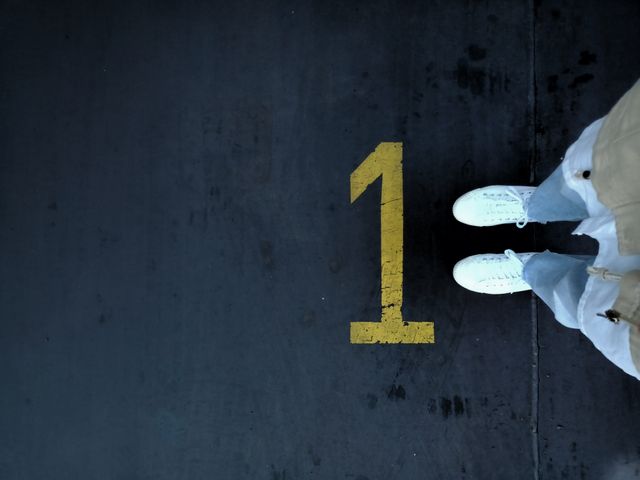
Jedan matches the noun that comes right after it. It agrees with the noun in gender, number, and case.
The number 1 has three forms:
- jedan is for masculine nouns;
- jedna is for feminine nouns;
- jedno is for neuter nouns.
Any big compound number that ends in the number jedan behaves like an adjective.
Examples:
- Treba mi broj (od) jedne žene koju ti poznaješ. (= I need a phone number of a woman you know.)
- Pričali smo o jednom našem rođaku. (= We were talking about one of our cousins.)
- Dali smo Mašin trotinet jednom detetu iz komšiluka. (= We gave Maša’s scooter to a child from the neighborhood.)
- Deca imaju hiljadu i jedno pitanje. (= Kids have a thousand and one questions.)
- Gledali smo “Sto jednog dalmatinca” sinoć. (= We watched “One Hundred and One Dalmatians” last night.)
Genitive For Quantity in Serbian: Numbers Two, Three, and Four
When you use the numbers dva, tri i četiri (2, 3 and 4), the noun that comes after them takes the genitive singular form. Wait! What? Singular? Is it maybe a typo? Well, no, it’s not a typo; it’s a rule.
The number dva has different forms depending on gender:
- dva for masculine and neuter nouns;
- dve for feminine nouns.
Examples:
- Bili smo na slavi četiri sata. (= We were at the slava for 4 hours.)
- Kupili smo dve stolice za kancelariju. (= We bought two chairs for the office.)
- Moj brat ima tri deteta. (= My brother has three kids.)
Just like with the number 1, this rule also applies to any larger compound numbers that end in 2, 3, or 4.
- Moj otac ima sedamdeset četiri godine. (= My father is 74 years old.)
- Noćenje sa doručkom u ovom seoskom domaćinstvu košta trideset tri evra. (= Bed and breakfast at this country house costs 33 euros.)
- Dva jaja su koštala dvadeset dva dinara. (= Two eggs costed 22 dinars.)
Genitive For Quantity in Serbian: Adjectives After 2, 3 and 4
When you use an adjective with masculine or neuter nouns after the numbers 2, 3, or 4, the adjective ending is -A, instead of the usual adjective ending –OG/-EG.
- Ovde rade dva zgodna muškarca. (= Two handsome men work here.)
- Ljudi u Srbiji imaju dva neradna dana za Božić. (= People in Serbia have two non-working days for Christmas.)
- Moje dete obožava priču o tri mala praseta. (= My kid adores the story about the three little pigs.)
- Pred nama su četiri topla dana. (= Four warm days are ahead of us.)
Genitive For Quantity in Serbian: Numbers Five and Above
For the number pet (5)and all higher numbers (5, 6, 7, 10, 20, 100, etc.), the rule changes. When you use these numbers, the noun that follows must be in the genitive plural form.
- Živeli smo u Americi sedam godina. (= We lived in the US for seven years.)
- Bićemo na odmoru deset dana. (= We will be on vacation for ten days.)
- Platio sam telefon sedamsto pedeset evra. (= I paid 750 euros for the phone.)
This rule applies to any compound numbers that end in pet (5), šest (6), sedam (7), osam (8), or devet (9) as well.
- Godina ima trista šezdeset pet dana. (= A year has three hundred and sixty-five days.)
- Mont Everest je visok osam hiljada osamsto četrdeset osam metara. (= Mount Everest is 8.848 meters high.)
- Nikola je obišao trideset devet zemalja. (= Nikola has visited thirty-nine countries.)
Genitive For Quantity in Serbian: Adverbs of Quantity
Numbers are not the only words in Serbian that control noun cases. Adverbs of quantity can do that too! These are words that describe an amount without giving an exact, specific number.
Some of the most common adverbs of quantity in Serbian include:
- koliko (how much/how many)
- nekoliko (several)
- malo (few/a little)
- mnogo (many/much); više (more)
- puno (a lot/lots of)
- (ne)dovoljno ((not) enough)
Genitive For Quantity in Serbian: Genitive Plural
If the quantifier is followed by a countable noun or a noun that only exists in plural form, use the genitive plural.
- Imam mnogo prijatelja. (= I have many friends.)
- Koliko dana ostajete u Beogradu? (= How many days are you staying in Belgrade?)
- Sigurno niste znali koliko vrata ima manastir Žiča – sedam! (= You certainly didn’t know how many doors the Žiča Monastery has – seven!)
- Treba mi nekoliko kiselih jabuka za pitu. (= I need a few sour apples for the pie.)
- Natalija je upoznala mnogo poznatih sportista dok je radila kao novinarka. (= Natalija met many famous athletes while she was working as a journalist.)

- Njegova porodica ima nekoliko stanova u Beogradu. (= His family owns several apartments in Belgrade.)
Genitive For Quantity in Serbian: Genitive Singular
If these same quantifiers are followed by uncountable nouns (mass nouns or abstract things that you cannot count individually) or nouns that only have a singular form, use the genitive singular.
- Molim Vas, još malo vode. (= Please, a little more water.)
- Potrošili smo mnogo vremena na renovaciju stana. (= We spent a lot of time on the apartment renovation.)
- Koliko dece imaju Novakovići? (= How many kids do the Novaković family have?)
- Ljubinko voli da stavlja mnogo šećera u kafu. (= Ljubinko likes to put a lot of sugar in his coffee.)
- Koliko novca ti duguje Lidija? (= How much money does Lidija owe you?)
Important to remember
The genitive form required by a number or an adverb of quantity does not change just because a preposition or verb would normally require another case. In other words, the quantity expression takes precedence.
✓ Moje dete priča o tri prijatelja.
✗ Moje dete priča o tri prijateljima. (The locative plural would be wrong here.)
✓ Pojeo je tri komada torte.
✗ Pojeo je tri komade torte. (The accusative plural would be wrong here.)
Bonus: You’re ready to find out more about how to use other Serbian cases? Check this out.
Let’s conclude!
It looks like a lot to memorize. But with a little practice, it becomes second nature. Just keep these three golden rules in mind:
- Treat number 1 like an ordinary adjective.
- Use the genitive singular with numbers 2, 3, and 4 or with quantity words followed by uncountable nouns.
- Use the genitive plural with numbers 5 and above or with quantity words followed by countable nouns.
Need a little extra practice with cases, numbers, or anything else in Serbian? Feel free to book Serbian lessons online.